01
What a gharana holds
When we speak of the gharana of a traditional musician, we mean the family traits of the music he practises and owes allegiance to. The concept of musical gharanas is physically comparable to that of families or clans in general, but in reality it is far more extensive and complicated. It signifies not only the physical characteristics, temperamental leanings and attitudes of the founder, in the same way as it would in the case of the ancestral line of a family, but much else that is contributed by all the talent that has come to drink at the fount of the master. This interaction and experience leave an enduring imprint on the common pool of the gharana’s wealth.
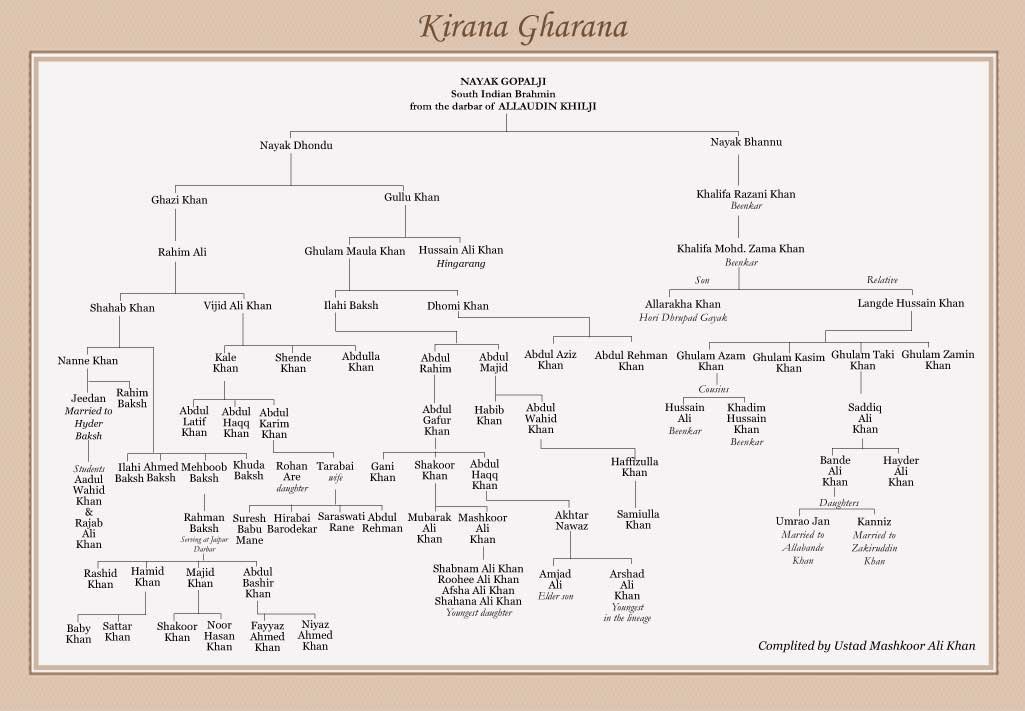
A musical gharana invariably grows around the genius of a creative master whose achievements automatically attract a collection of aspirants, admirers, and disciples. Traditionally, these masters command the kind of unqualified reverence that is associated with religious gurus. Their followers not only unquestioningly adhere to the musical principles laid down by them but also unconsciously imitate the physical characteristics of their role models. This small nucleus grows and widens as the style associated with the master gains prestige and acceptability among music lovers. Each gharana has a temperament since it reflects and carries within itself the seeds of the personality of the master with whom it originated. The outstanding khayal gharanas today are Gwalior, Agra, Kirana, Jaipur-Atrauli, and Patiala, each named after the original place of residence of the ustad or family of ustads around whom closely guarded musical guilds grew and flourished. It is fascinating to observe how the traits, aptitudes and predilections of a master mould the musical approach and attitudes of a gharana.